
Full Court, Empty Book
Scale, slogans, and the shrinking economics of Chinese women’s basketball

Odd as it might sound, WCBA is the biggest women's top professional basketball league by many measures. But regular readers of this column will know that meant very little for the professional running thereof. Indeed, on New Year's Day Chinese Basketball Association announced a training camp for the women's national team just as the season gathers momentum. The camp is expected to last until the conclusion of World Cup Qualifiers in Wuhan on 17 March, right before the playoffs, meaning these players would miss the newly set up WCBA Cup as well as three quarters of the regular season.
Actually, even though it is the biggest top flight on earth, for this year's competition three teams have already withdrawn from, among them Inner Mongolia, long sustained by the patronage networks of former provincial basketball official Mengke Bateer, who starting in 2021 famously swapped wrestling talent with Guangdong in return for women’s players — an arrangements that now have run their course.
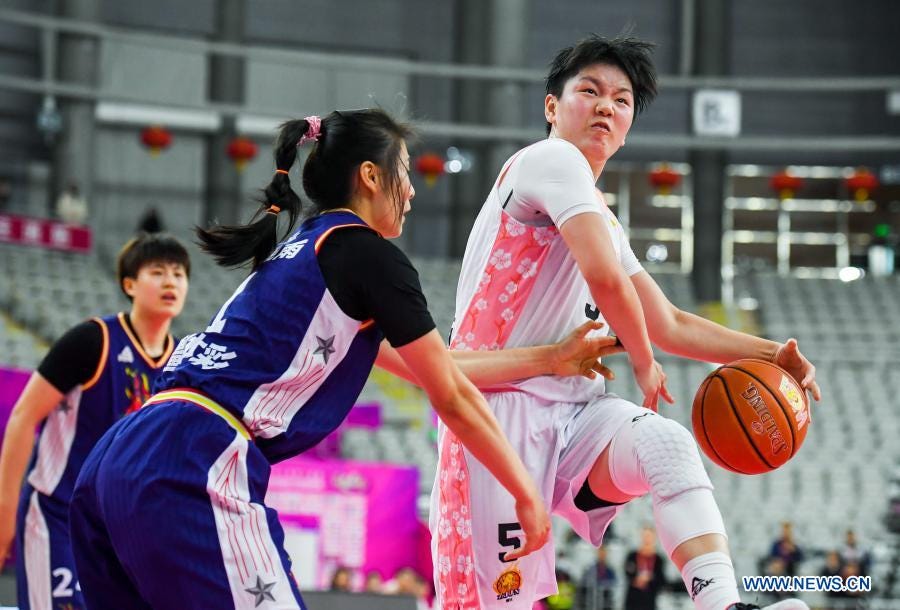
Come to really think of it, the WCBA is divided into two Groups, though according to the official definition, these are not two distinct divisions. Attempts to have more of a distinction between the better and lesser teams have been made, but have met the immediate resistance of local governments, which already put having a top-flight women's basketball team in their work report. In practice, the league functions less as a competition than as a reservoir of players for higher priorities.
In fact, nine players - eight of whom are still at Beijing Sport University - had already spent December — the league only started on 30 Nov — there for a 'mini-class'. It was for the shortage of hands that Gong Luming, one of the few remaining active participants of the 1988 Seoul Olympics and head coach for the men's national team on three separate occasions, decided to call for reinforcements. Zhang Ziyu, whose videos as a junior national team player made much hay on social media, was allowed to return to Shandong to play her first senior club games, after overambitious pre-season negotiations left her without a club. She proved helpful in attack and a huge liability on defence.
Faced with this reality, owners of these short-changed teams, who are still liable for the called-up players' wages, made quaint grumbles but largely toed the line. A concession was made that their team will be allowed to play an additional foreign player in a quarter, but nothing else was put on the table. After all, the source of their misfortune lies well above their pay grade: in August 2025, Xi Jinping reiterated that the success in 'three big balls' - foot, basket, and volley - is the symbol of a successful, great nation. Pressure was passed down. In last year’s great Shenyang conference, men's basketball was asked to qualify for the Los Angeles Olympics and reliably (sic) to continue doing so for every Olympics and World Cup through to 2035. For the women's side, which unexpectedly won a silver at the World Cup in 2022, a medal is now the iron-fisted demand from the General Administration of Sport. A slogan at the top often becomes a timetable at the bottom.
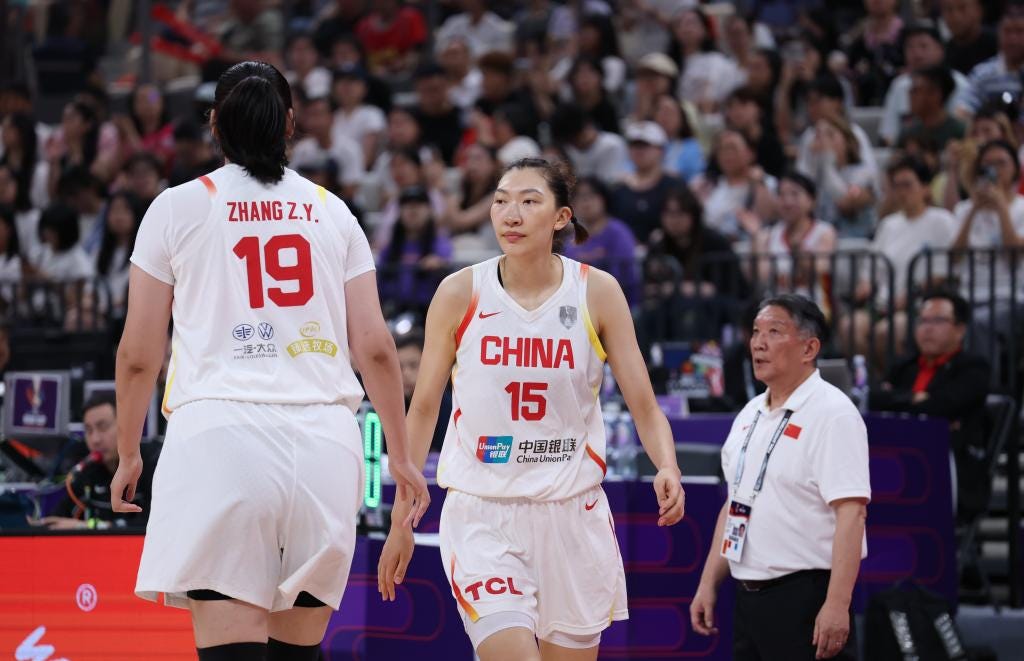
But both teams have already had their fair share of setbacks - the men's team has lost two ignominious games to South Korea and is facing a re-invigorated Japan this month, the squad selection for which is already causing controversy. Should they continue the losing streak, the pressure will, almost by design, be transferred to the women's side, whose slip-up with a bronze at Asian Cup last year was eased by men's side's surprise silver. They face the likes of Belgium, Brazil, and South Sudan After that, the CBA will surely face another round of withdrawals of teams at the end of the season. Combined with the trouble at the men's league, in 2026, unprofitability in Chinese basketball can be spelt in more than one way and written in both genders.